
How Arrest Warrants Work in Brown County
An arrest warrant gives an officer legal authority to take someone into custody on a criminal charge. In Minnesota the process starts with a complaint. Behind that complaint sit facts. A district court judge reads them and asks one question: is there probable cause that an offense happened and that this defendant committed it? If yes, the judge issues either a summons or a warrant. For county cases, Brown County District Court is the issuing court. The summons wins when a person is easy to find and likely to show up. A warrant is the choice when the person's whereabouts are unknown, when the odds of nonresponse run high, or when arrest is needed to prevent imminent harm. That one distinction explains why two people facing similar charges in Brown County can end up with very different paperwork from the same courthouse.
Probable Cause in Brown County Arrest Warrants
Minnesota Rule of Criminal Procedure 3.01 spells this out in plain language. The facts can come from the complaint itself, from supporting documents, or from sworn testimony. A judge weighs what is there and decides whether the standard is met. That review settles how the case moves forward and how the person gets brought in. It settles nothing else. The path is short and predictable: complaint, judicial probable-cause decision, warrant or summons, service or return, then a first appearance with release conditions set. Here is the catch for anyone doing a Brown County warrant lookup. Documents tied to an unserved warrant can stay confidential under Minn. Stat. 13.82, subd. 19. Until an arrest or an appearance occurs, the court file may look thinner than a reader expects.
Arrest Warrants: What They Contain
An arrest warrant is a court order packed with identifying details. Name, date of birth, charge, and issuing judge are typical fields. Brown County publishes only a few of them online, so the full warrant document and the court file hold the rest.
| Court file number | The case identifier, such as 08-CR-24-0000 |
|---|---|
| Defendant | The named party, withheld here because this site publishes no personal records |
| Charge and statute | The offense, its classification, and the statutory citation |
| Probable-cause basis | The complaint or sworn facts that supported issuance |
| Issuing court and judge | Brown County District Court and the judicial officer who signed |
| Bond and conditions | Any amount or release condition set with the warrant or at first appearance |
| Service and return | Whether an officer executed the warrant and when the court was notified |
Brown County Warrants and the Response Unit
Brown County shares a regional Emergency Response Unit with Redwood, Renville, and Lyon counties, a partnership the Sheriff's Office describes on its programs page. The unit backs high-risk search and arrest warrant operations. Why pool people? A rural county with scattered townships and about 1,060 roadways cannot field a full tactical team on its own. Neighboring agencies fill that gap together. None of this warns you about any one person. The team's work stays operational, and it publishes no roster. Still, knowing the unit exists explains why a warrant service in Brown County can draw several agencies rather than a single deputy at a door.
How Warrants Get Served in Brown County
A warrant can be served anywhere an officer lawfully meets the person. Think traffic stops, homes, workplaces, or a jail booking on something else. Minnesota Rule 3.03 permits execution by any officer authorized by law, so state, federal, or other county officers may take part. Brown County publishes no warrant assignment list. No single office can tell you which deputy is looking for whom.
Brown County Sheriff's Office
15 South Washington Street, New Ulm
507-233-6700
County service, confirmation, and custody routing
New Ulm Police Department
15 South Washington Street, New Ulm
507-233-6750
City-area enforcement
Springfield Police Department
16 North Marshall Avenue, Springfield
507-723-3514
City-area enforcement
Unserved Brown County Warrants Stay Confidential
Searching and finding nothing does not clear you. Minnesota keeps its unserved arrest warrant index confidential until the person is in custody, served, or before the court. Brown County's Sheriff's Office inventory repeats that classification for its warrant files, and active investigative data stays protected while a case is open. A clean warrant search is not a clearance. A records request will not unlock that protected data either. So when the answer truly matters, call the issuing court or the Sheriff's Office directly. That phone call beats any online lookup in Brown County.
Arrest Warrants, Summonses, and Bench Warrants
Minnesota separates these tools, and the difference shapes what happens when an officer stops you. A summons orders an appearance and carries no arrest authority. A bench warrant enforces a court obligation in a case that already exists. Brown County readers should know that an arrest warrant rests on probable cause for a charge, making it the most serious of the three.
| Instrument | What It Does | Arrest Authority |
|---|---|---|
| Summons | Orders a court appearance in a pending case | No |
| Arrest warrant | Authorizes custody on a charge supported by probable cause | Yes |
| Bench warrant | Enforces a missed appearance, missed obligation, or release violation | Usually yes |
| Sign-and-release warrant | Notifies a qualifying first-time nonappearance | No, under Minn. Stat. 629.415 |
| Search warrant | Authorizes a search for evidence, not an arrest | No, on its own |
Federal Arrest Warrants in Brown County
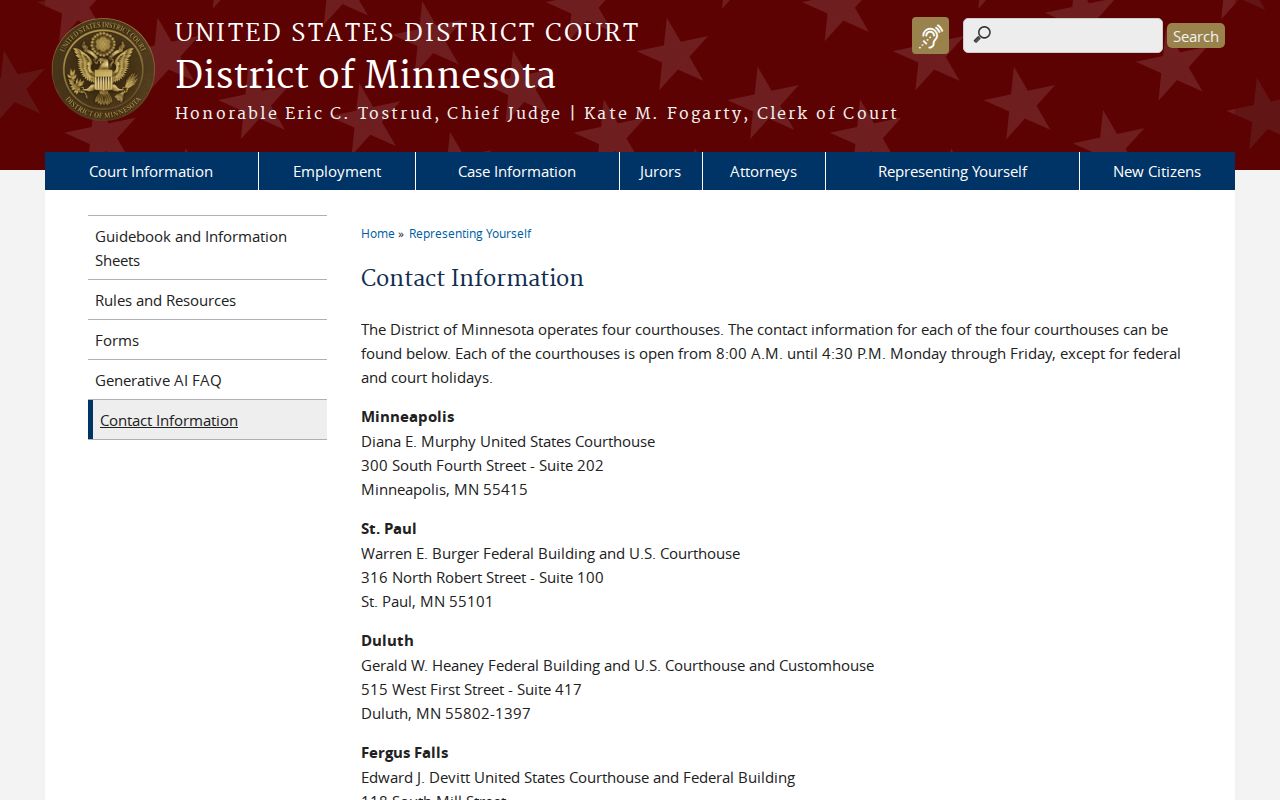
Brown County falls inside the U.S. District Court for the District of Minnesota, which keeps courthouses in Minneapolis, St. Paul, Duluth, and Fergus Falls. A federal arrest warrant comes from a federal judge or magistrate. Neither the Brown County report nor the state case search will show one. The federal district contact page lists each courthouse and the clerk's office, and the clerk's general number is 612-664-5000.
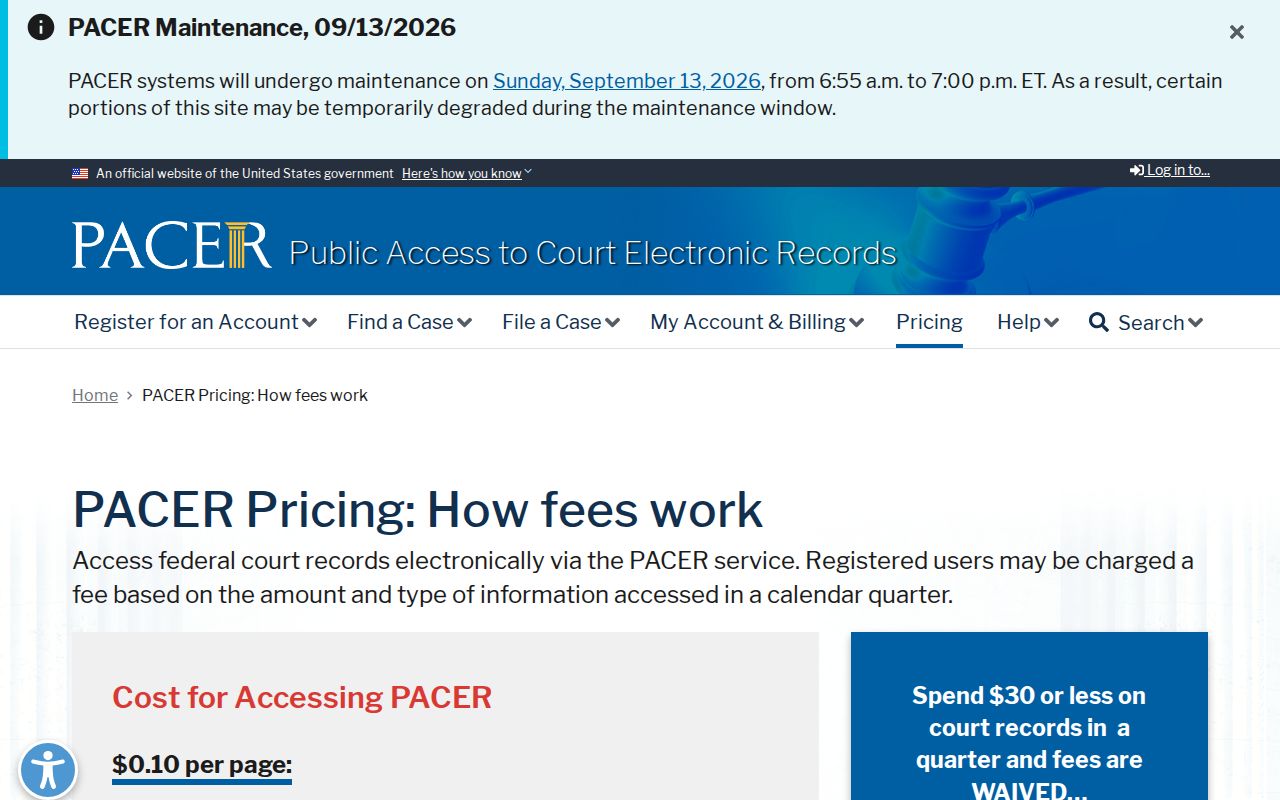
The U.S. Marshals Service usually executes federal warrants, covering Brown County from its Minnesota district office. The district number is 612-664-5900, and the North Star Fugitive Task Force line is 612-664-5910. For federal case records, PACER is the official system. It charges 10 cents a page, caps most case documents at $3, and waives quarterly charges of $30 or less.
A docket entry proves nothing about a warrant's status. It does not confirm the warrant is public or active, and a sealed complaint never appears. For a federal matter in Brown County, call a federal defense attorney or the federal court.
Handling an Arrest Warrant in Your Name
A Brown County arrest warrant is not something to face without a plan. Walk up to a counter unprepared, and you could be taken into custody right there. Wait it out instead, and the arrest may come at a worse time. A lawyer can arrange a surrender that keeps some control over the timing. Once you are arrested under a warrant, Minnesota Rule 4 requires that you go before a judge without unnecessary delay. Release after that point falls under Minnesota Rule 6.
Important: Speak with a Minnesota criminal defense attorney before surrendering, and never approach anyone else named in a warrant, because only a judge can set release conditions.
- Confirm the warrant, the case number, and the issuing court through official channels.
- Call a Minnesota defense attorney and share the case number and any bond information.
- Ask the court whether an attorney appearance, a recall motion, or a scheduled surrender is available.
- If surrender is arranged, confirm the location, the hours, the identification to bring, and what happens after booking.
- Expect a first appearance, a release decision, and a separate path for the underlying charge.
Once a Brown County warrant is confirmed, the county overview walks through what happens next. A private attorney can steer the rest of the process.
Bond After a Brown County Arrest Warrant
Bond in Brown County is a court decision, not a fee schedule. Minnesota Rule 6.02 governs it. That rule lets a judge release a person outright with no bail, and otherwise begins with personal recognizance or an unsecured appearance bond. Public safety or the odds of appearing can push the court to demand more. Where money bail is set, the rule requires release through cash or sureties, with no extra conditions attached. Separately, the county fee schedule charges a 15 dollar booking fee per inmate and agency. That charge is not bond and clears nothing. Brown County publishes no warrant bond schedule. The amount in any case comes from the court's own order. Bond secures release and appearance only; it neither dismisses a charge nor resolves the case.